
Air Duct Cleaning: Repair or Replace? How Draper Homeowners Decide
Most Draper homeowners assume the decision comes down to duct age. It usually doesn’t. What actually decides whether you clean, repair, or replace comes down to three things: the material your ducts are made of, where a breach sits in the run, and whether contamination has soaked into the duct liner in a way a brush and a vacuum can’t fix. Get those three answers and the decision mostly makes itself. If you’d rather not crawl through an attic figuring it out, call (855) 658-5334 and we’ll take a look.
Why duct age alone is the wrong way to decide
A 1990s flex duct system in good condition can be a better candidate for cleaning than a ten-year-old system that’s been sitting in a damp crawl space collecting debris. Age tells you how much time a system has had to wear, not how much wear it has actually taken. What matters is condition.
In our experience across Draper, the answer almost always traces back to material. Sheet metal, duct board, and flex duct each respond differently to cleaning, sealing, and replacement, and treating them the same is where homeowners end up spending money twice. A duct system that gets cleaned when it needed sealing will just collect debris again. A system that gets sealed when the liner is already degraded will trap contamination behind a tidy-looking shell.
Before any quote means anything, someone has to look inside the actual runs. That’s the starting point, not the age on the original build permit.
The three duct materials common in Draper homes, and how each responds
Draper’s housing mix means technicians run into three main materials, and each one behaves differently under cleaning equipment:
- Sheet metal. The most forgiving. It’s smooth, non-porous, and holds up to rotary contact cleaning. Contamination sits on the surface, so a Rotobrush contact-cleaning system can agitate it loose and a HEPA-rated Nikro machine can capture it. If a seam separates or a joint pulls apart, physical repair or sealing usually restores it.
- Duct board. Rigid fiberglass board with a foil or mat facing. It cleans well when the facing is intact, but if the board has taken on moisture or the facing has torn, the exposed fibers trap debris and the board itself becomes the problem. Section replacement is often the honest answer rather than aggressive cleaning.
- Flex duct. The flexible corrugated duct that runs through many attics and crawl spaces. This is the one that shapes most of these decisions. Flex has a thin inner liner, and older flex installed before 2000 in many Draper-area homes uses a liner material that absorbs contaminants rather than releasing them under brush agitation. Cleaning it can stir contamination without actually removing it. When the liner is that far gone, replacement is the more effective option than a cleaning that can’t deliver a real result.
Knowing which of these you’re dealing with changes everything downstream. Cleaning is the right call for a sound system that’s simply dirty. Repair and sealing handle breaches and separations. Replacement is the honest recommendation when the liner itself can no longer be cleaned to a standard worth paying for.
What a scope camera inspection actually reveals
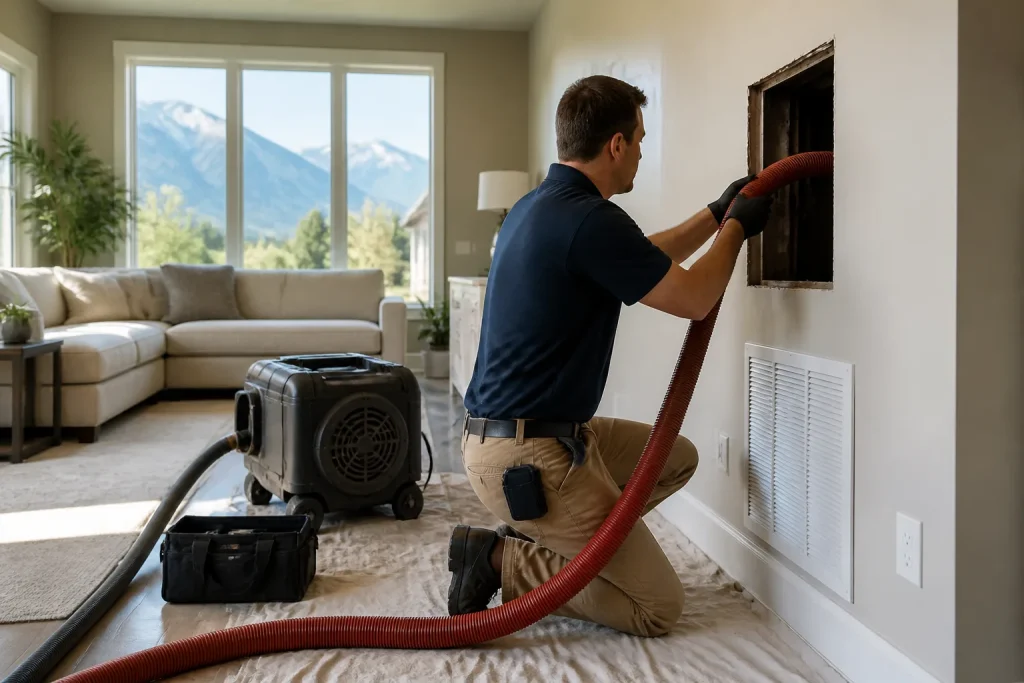
The single biggest gap between a good quote and a wasted one is whether anyone actually looked inside. A scope camera run through the system during the cleaning process shows things a flashlight at the register never will:
- Breach points where a run has separated, been crushed, or disconnected entirely. These are where unfiltered air and debris enter the system, and no amount of cleaning fixes a gap.
- Liner degradation on flex duct, where the inner surface has started breaking down or absorbing moisture and debris.
- Collapsed or pinched sections that choke airflow and can’t be cleaned around, only replaced.
- Contamination carried past the duct into the air handler or coil, which changes the job from a duct cleaning into a full HVAC cleaning.
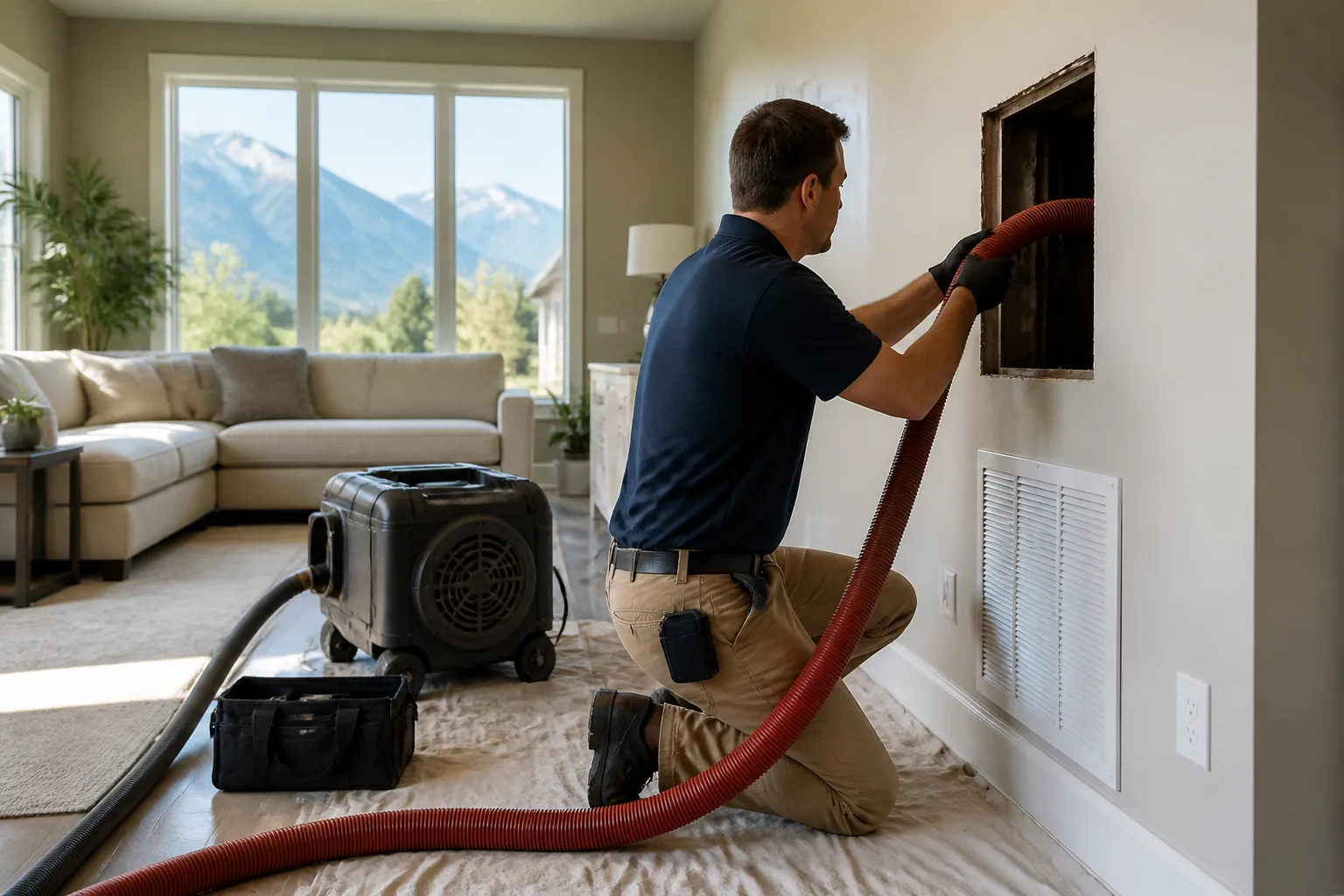
This is where scope findings change the whole scope of a job mid-process. A technician starts with a cleaning, finds a collapsed section and a degraded liner behind it, and the honest recommendation shifts. That’s not a sales tactic. It’s the inspection doing its job. The point of running professional equipment is that the findings are visible rather than guessed at. Abatement Technologies negative-air containment keeps dislodged material captured during the process rather than redistributed into living space, so what the camera sees and what the equipment removes stay in sync.
Cleaning vs. Aeroseal sealing vs. physical repair: which comes next
Once the system is clean and you know its condition, the next step depends entirely on what the inspection found. These three are not interchangeable:
- Aeroseal duct sealing is the right next step when the ductwork is structurally sound but leaking at joints, seams, or small gaps. It seals the interior of the system from the inside, closing leaks that waste conditioned air and pull in unfiltered air. It’s efficient and non-invasive, and it works best on a clean system.
- Physical duct repair handles the failures sealing can’t. A disconnected run, a crushed section, a torn flex liner, or a collapsed boot needs hands-on repair or section replacement. Sealing a disconnected duct just seals a gap that shouldn’t be there.
- Section replacement is the call when the material itself is the problem, like a flex run with a compromised inner liner or duct board that’s taken on water. Replacing the failed section restores the whole system’s integrity in a way cleaning and sealing can’t.
Draper’s dry climate helps in one way and hurts in another. Low humidity limits moisture-driven mold growth in ducts. But dry air and big temperature swings between summer and winter work flex duct hard. Attics see real heat cycling, and crawl spaces expose flex to UV and dry rot over time, which accelerates liner breakdown. That’s why a durable-looking flex run can be structurally finished underneath a clean exterior.
Matching the right step to the actual condition is the whole game. When it’s done right, the system ends up clean, sealed, and sanitized rather than just vacuumed.
The cost question: cleaning a system that needs replacing
Here’s a framework homeowners rarely hear stated plainly. Spending money cleaning a duct system that’s already deteriorated is money you’ll spend again. The real comparison isn’t cleaning versus replacement. It’s cleaning now and replacement soon, versus putting that same money toward new ductwork with a cleaning included in the job.
Cleaning is the value play when the system is sound and just needs maintenance. It’s the wrong spend when the scope camera has already shown a degraded liner or a collapsed section, because the cleaning won’t hold. Sealing is a moderate-cost step that pays back over time in efficiency and air quality when the ductwork is structurally sound but leaky. Section replacement sits in the middle: less than a full system, but real money that should be spent with eyes open.
The honest version of this advice is to get the inspection first, then price the job on what’s actually there. A quote given before anyone has scoped the system is a guess. In Draper, that guess is where the disappointment starts.
When to call a pro
Reach for the phone rather than a shop vac when you’re seeing any of these:
- Visible debris or dust blowing from registers after a cleaning.
- Uneven airflow between rooms, or rooms that never warm or cool properly.
- Musty or stale odors when the system runs.
- A scope camera showing liner degradation, collapsed sections, or separated runs you can’t see from the register.
- Household allergy or asthma concerns where you want documented, equipment-backed results rather than a vague fresh-air promise.
Crawling through attic flex with a flashlight is not a DIY diagnose-it-yourself job. The equipment matters here. Your ducts are only as clean as the machine doing the work, and professional-grade Rotary contact cleaning and HEPA capture do things a consumer tool can’t. If your investigation also turns up dryer vent concerns, that’s a separate fire-risk matter worth handling on its own. If you’d rather have one specialist cover the whole system, air duct cleaning, duct repair and sealing, and sanitizing can all be handled in a single visit, which is one reason homeowners lean on us for the full picture. We also work with Honeywell and Aprilaire product lines when a whole-home air quality piece makes sense alongside the cleaning.
Related services in Draper: air duct cleaning and dryer vent cleaning, plus HVAC cleaning when contamination has carried past the ducts into the equipment. For the full picture of what we handle, see Draper Air Duct Cleaning.
The Bottom Line
- The clean-versus-repair-versus-replace call is about material, breach location, and liner condition, not duct age.
- Sheet metal cleans and seals well. Duct board and flex are the ones where deterioration can outrun what cleaning can fix.
- Older flex with an absorbing inner liner often makes replacement the more effective choice than a cleaning that can’t remove the contamination.
- Scope camera findings should drive the recommendation, not a pre-written quote.
- Aeroseal sealing fits a sound but leaky system; physical repair and section replacement fit the failures sealing can’t reach.
- Don’t spend to clean a system that already needs replacing. Put the money toward new ductwork with a cleaning included.
The through-line is simple: inspect first, then decide. Professional-grade equipment, not big-box tools, and a technician willing to show you what the camera found is what separates a real answer from a sales pitch. Our technicians have up to 13 years of experience scoping and cleaning systems across Draper. If you’re in Draper and need help deciding, Draper Air Duct Cleaning offers free estimates. Call (855) 658-5334. We answer 24/7. Fast dispatch from 7am to 7pm, Sunday through Friday.
Frequently Asked Questions
You start with a scope camera inspection, because the answer depends on material, breach location, and liner condition, not age. Sheet metal that’s simply dirty gets cleaned, leaks get sealed, and degraded flex or water-damaged duct board usually calls for replacement. Call (855) 658-5334 for a free estimate.
It can if the inner liner is degraded. Older flex installed before 2000 in many Draper-area homes uses a liner that absorbs contamination rather than releasing it under brush agitation, so cleaning stirs it without removing it. When the liner is that far gone, replacement is the more effective option. Call (855) 658-5334 for a free estimate.
Neither is universally better. Aeroseal is the right next step when the ductwork is sound but leaking at seams and joints. Physical repair is right when a run is disconnected, crushed, or the liner is torn, because sealing can’t fix a structural failure. Call (855) 658-5334 for a free estimate.
Draper’s dry air and big seasonal temperature swings stress flex duct in attics and crawl spaces, and that speeds up liner breakdown over time. Low humidity limits moisture-driven mold, but heat cycling and UV exposure still wear the material. Call (855) 658-5334 for a free estimate.
Written by the team at Draper Air Duct Cleaning.
Need Air Duct Cleaning Help?
Call Draper Air Duct Cleaning - the local pro we connect you with is licensed and insured, with free written estimates in Draper.
(855) 658-5334