
Last updated November 23, 2026
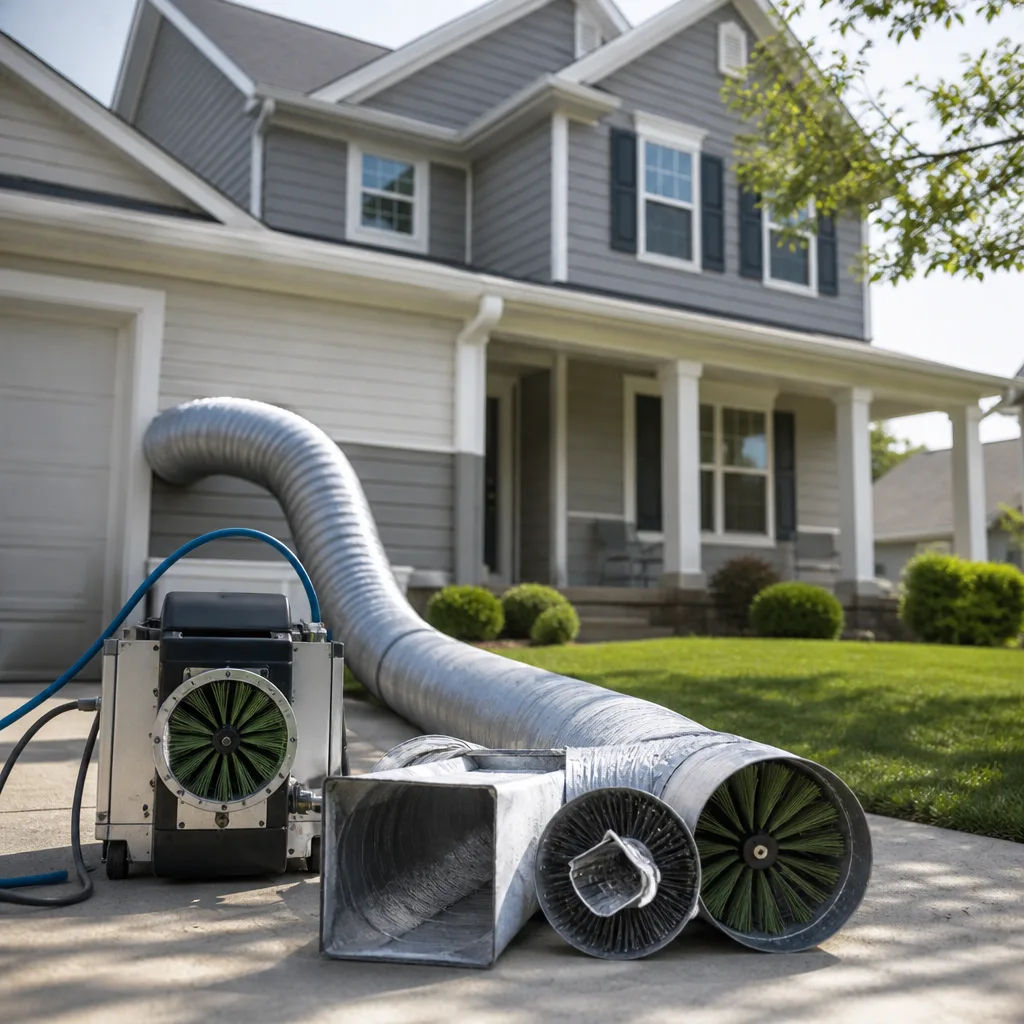 Whole-home duct cleaning
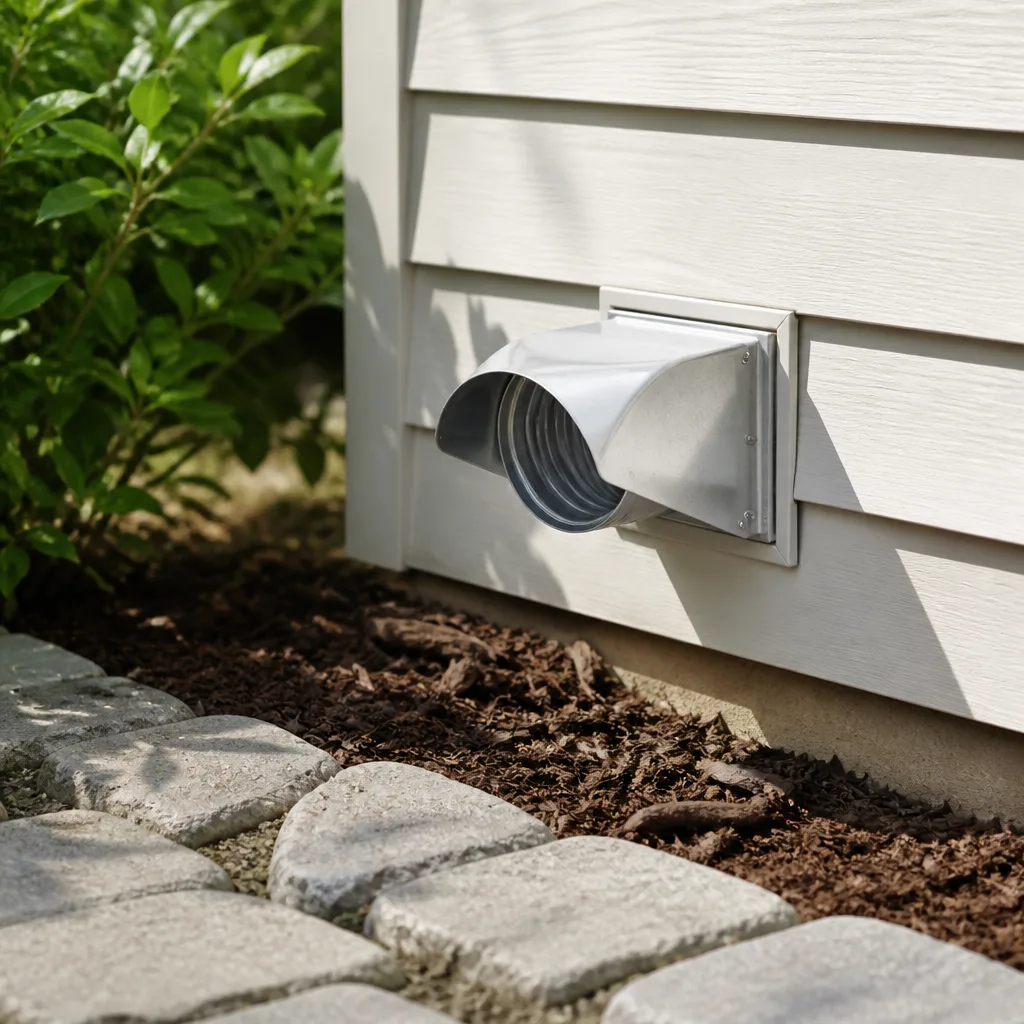 Dryer vent cleaning
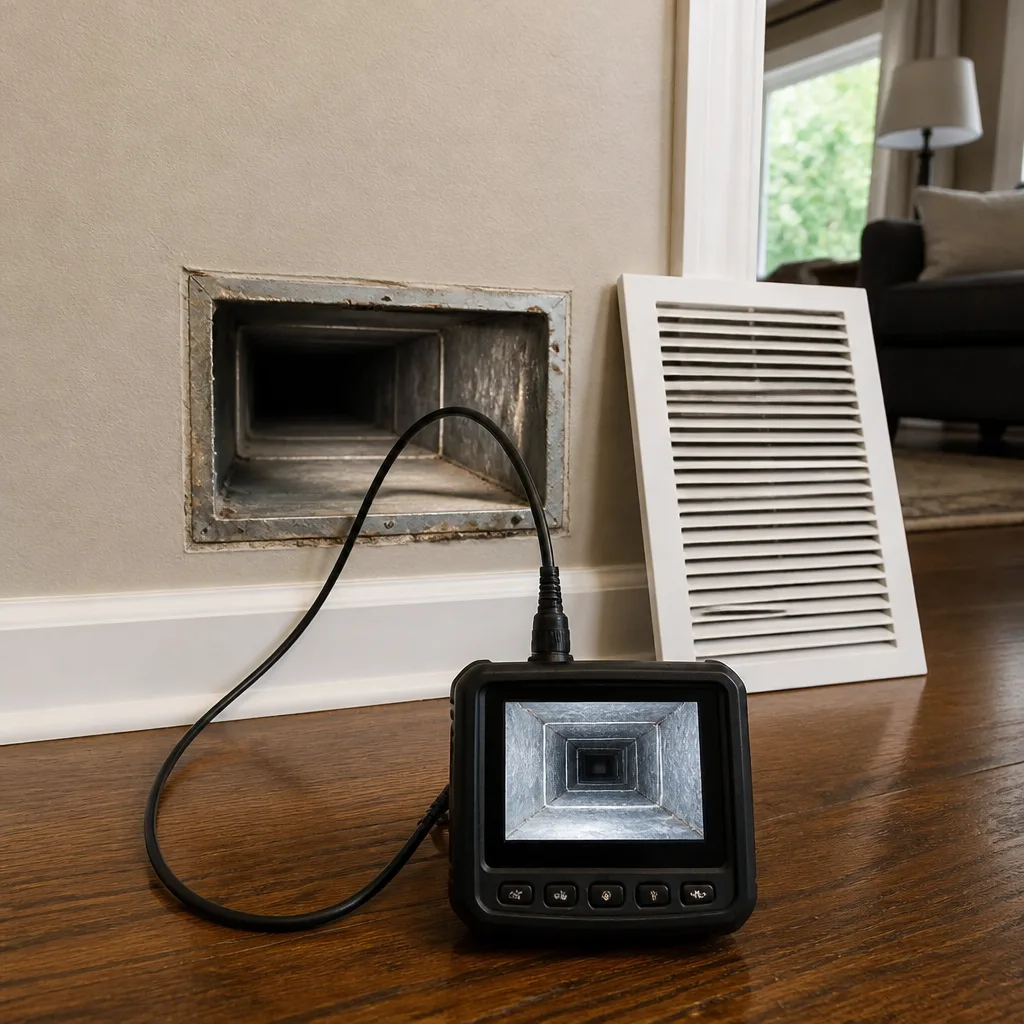 Camera inspection
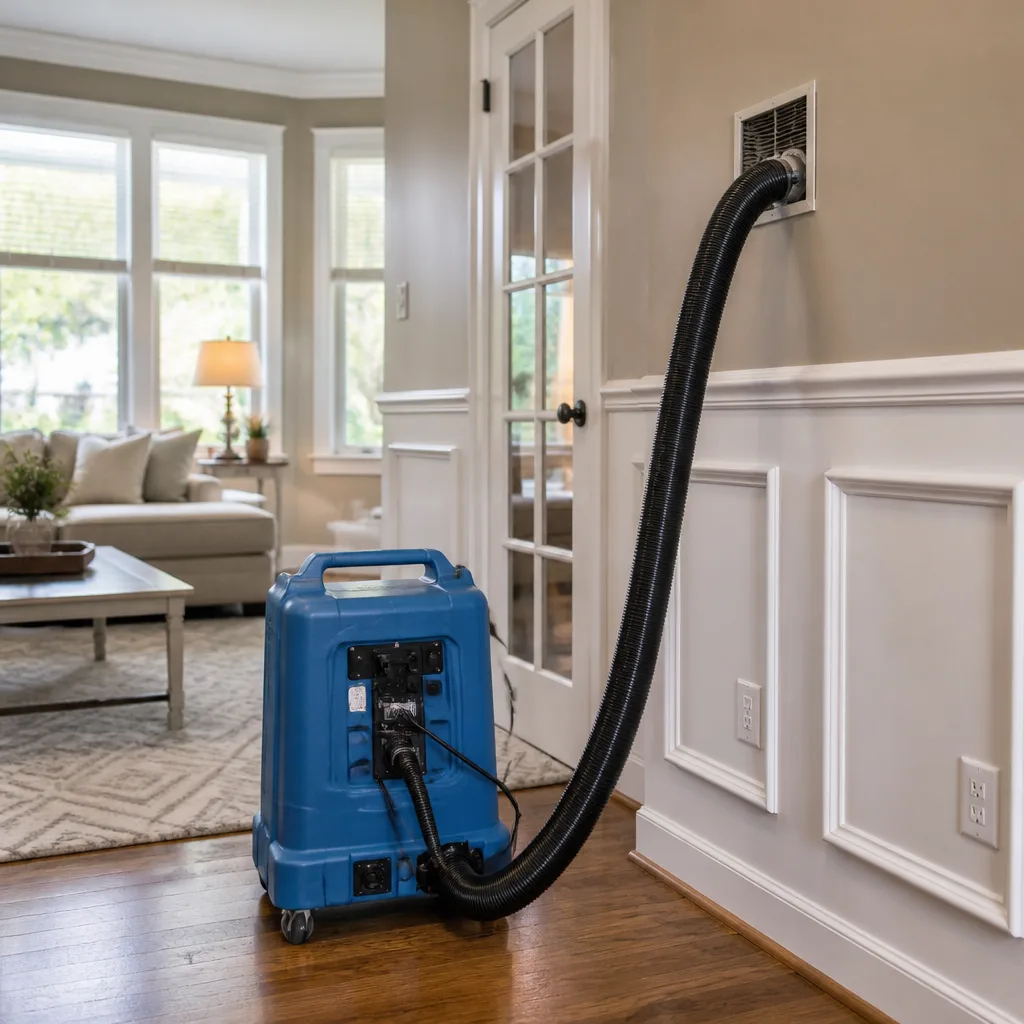 Sanitizing & deodorizing
Whole-system duct and dryer vent check with before-and-after photos - you see exactly what came out of your vents
That "$99 whole-house special" is a bait ad - the real number appears once they are in your hallway, or the "clean" is a shop-vac at the register. We photograph the inside of your ducts before and after instead.
DIY vs Professional Air Duct Cleaning: The Draper Homeowner’s Decision Guide
Here’s the part most duct cleaning articles get wrong: your vacuum isn’t dangerous, and it isn’t useless. It’s just limited to the first 18 inches or so of duct behind each register. In a typical Draper home, that reachable stretch is maybe 10% of the total duct surface area. The other 90% – trunk lines, return plenum, air handler, evaporator coil – sits behind angles, transitions and cabinet panels that no brush attachment will ever see. This guide maps exactly what you can clean yourself and what genuinely needs professional equipment, so you can decide with real information instead of a sales pitch.
Quick Answer
DIY duct cleaning handles the first 18 inches behind your registers and your dryer vent’s exterior cap. Everything deeper – trunk lines, the return plenum, the air handler cabinet, the evaporator coil – needs professional-grade equipment. If you’re doing routine surface dusting, DIY is fine and worth doing. If you’re dealing with renovation debris, visible mold, rodent droppings or a new-to-you home, book professional cleaning. The cost of a whole-home cleaning is usually less than the cost of guessing.
Styles & brands we work with
- Whole-home duct cleaning
- Dryer vent cleaning
- Camera inspection
- Sanitizing & deodorizing
Table of Contents
- A Physical Map of Your Draper Home’s Duct System
- What DIY Can Actually Reach (and What It Can’t)
- The Risk Nobody Warns You About: Agitation Without Containment
- A Legitimate DIY Maintenance Protocol
- The YouTube Problem: Why Viral Duct Cleaning Videos Mislead
- When Professional Cleaning Isn’t Optional
- What Professional Equipment Does That a Shop Vac Can’t
- What Professional Cleaning Costs in Draper
A Physical Map of Your Draper Home’s Duct System
Picture your duct system as a tree lying on its side. The trunk runs through your attic or crawlspace. Branches split off and drop into rooms through the ceiling or floor. At the root end, the air handler and evaporator coil condition the air before it enters the trunk.
Here’s how that map breaks down in a typical Draper home, whether it’s a newer build out near SunCrest or an established house closer to Draper Park:
- Supply registers (bedrooms, living areas): The metal grille you see. Behind it, a short duct run – usually 12 to 24 inches – connects to a branch. DIY-reachable.
- Branch runs: The ductwork from register to trunk connection. Some sections are reachable if you remove the register boot; most aren’t. Partially DIY-reachable, with effort.
- Trunk lines: The large rectangular ducts distributing air to each zone. Long horizontal runs, sharp turns, and plenty of surface area. Not DIY-reachable.
- Return plenum: The big box where return air collects before entering the air handler. This is where a lot of debris settles. Not DIY-reachable.
- Air handler cabinet: Houses the blower. Needs the panel removed and a proper vacuum with HEPA filtration. Not DIY-reachable safely.
- Evaporator coil: The cooling coil. Dust collects on the fins and restricts airflow. Cleaning requires coil-specific tools and knowledge. Not DIY-reachable.
- Dryer vent exterior cap: The louvered flap on your exterior wall. This one is genuinely DIY-accessible and worth checking regularly.
If you’ve ever looked into the supply duct behind a register and thought “that’s not bad,” you’re correct – it usually isn’t. The contamination concentrates in the sections you can’t see from a register opening. That’s not a marketing claim; it’s just how airflow and gravity work over years of operation.
What DIY Can Actually Reach (and What It Can’t)
DIY duct cleaning in Draper is a reasonable maintenance practice if you understand its boundaries. Here’s the honest breakdown.
What DIY handles well
- Dusting the inside surface of the register grille and the first 12 to 18 inches of duct behind it
- Vacuuming the exterior dryer vent cap and clearing lint from the flap
- Replacing or upgrading your HVAC filter on schedule
- Visual inspection with a flashlight and phone camera to spot problems early
- Removing surface dust from return grilles in hallways and stairwells
What DIY cannot reach
- Trunk lines – the long horizontal runs where dust accumulates and compacts
- The return plenum, which is often the dirtiest section of the whole system
- The air handler cabinet and blower wheel
- The evaporator coil fins
- Branch ducts beyond the first bend
- Any duct section concealed behind drywall, in a chase, or under insulation
We’ve seen Draper homeowners spend an afternoon with a shop vac and a brush kit, then wonder why the house still smells like dust when the furnace runs. The answer is simple: a shop vac with a 6-foot hose cleans the section closest to the register. The trunk line, 20 feet away, hasn’t been touched. When specialists perform full-system air duct cleaning, they’re reaching the parts a homeowner physically cannot.
One more thing worth naming: our technicians have up to 13 years of experience, and every one of them will tell you that “I cleaned my ducts myself” usually means “I cleaned my registers.” Those are not the same job.
The Risk Nobody Warns You About: Agitation Without Containment
This is the part of the DIY duct cleaning conversation that gets skipped. Here’s the mechanism:
When you agitate dust inside a duct – with a brush, a nozzle, or a vacuum attachment – you break loose particles that have settled. Somewhere between 30% and 70% of what you dislodge (depending on the attachment and how much force you apply) never reaches your vacuum. It floats out of the register into the room. If the system fan happens to be running, it gets pulled through the rest of the house.
Professional duct cleaning uses something called negative pressure containment. Abatement Technologies equipment creates a sealed vacuum on the system while technicians agitate the ducts from inside. Particles that break loose get pulled toward the collection unit, not toward your living room. Nikro HEPA-rated machines capture fine particulates down to a sub-micron level. Rotobrush rotary contact-cleaning systems do the agitation and the capture with the same tool.
Without containment, DIY cleaning is about 70% agitation and 30% capture. That’s backwards from how it should work.
This matters most if anyone in the house has asthma, allergies, or a compromised immune system. Agitating ducts without containment can briefly increase the airborne particulate load in a home – the opposite of what you’re trying to accomplish. For households with sensitive occupants, the containment question is the main reason to book professional cleaning even in a house that looks clean.
A Legitimate DIY Maintenance Protocol
We’re not going to tell you not to touch your ducts between professional cleanings. Here’s what we’d actually do if it were our own home in Draper.
- Every month – filters. Pull your HVAC filter, hold it to a light, and replace it if you can’t see through it. In Draper’s spring pollen season, filters load faster than the packaging suggests. A clean filter keeps demand on the system low and reduces dust reaching the coil.
- Example: upgrade to a MERV 11 to MERV 13 filter. Honeywell and Aprilaire filtration products are among the options worth considering. Don’t jump to the highest MERV rating without checking what your blower can handle – too restrictive a filter strains the system.
- Every two months – registers. Remove each register grille (usually two screws), vacuum the inside surface and the first foot or so of duct with a brush attachment, and reinstall. This is legitimate DIY maintenance – it keeps the visible duct from getting worse.
- Twice a year – dryer vent cap. Step outside and check the exterior flap. If it won’t close freely, if lint is building up around the opening, or if you see birds or insects, clear it and inspect for damage. This is a fire-safety item and it’s worth doing on a schedule. For deeper dryer vent line cleaning, our dryer vent cleaning service handles the full run.
- Yearly – visual inspection. Shine a flashlight into each supply and return. Look for visible dust buildup, discoloration, or moisture. Take photos. Document anything that looks like it’s getting worse.
- Never – blow dust into the ducts with compressed air, a leaf blower, or a shop vac running in reverse. That’s agitation without capture, in its worst form.
If you follow this protocol, you’ll get real value from DIY. You’ll also know within a few months whether the system genuinely needs a professional visit or just periodic attention. Documenting with photos is how you tell the difference.
The YouTube Problem: Why Viral Duct Cleaning Videos Mislead
Search “DIY duct cleaning” on YouTube and you’ll find two categories of video. One is legitimately useful: register cleaning, filter changes, visual inspection. The other is a problem.
The problem videos show someone attaching a leaf blower, a shop vac, or a homemade contraption to a duct opening, then blowing air through the system while filming the dust cloud that comes out of other registers. It looks dramatic. It gets views. It’s also roughly what NADCA (the National Air Duct Cleaners Association) warns against. Blowing air through a duct system without containment is not cleaning – it’s redistributing. The debris that leaves your ducts doesn’t disappear; it lands on furniture, in carpet, and scattered through the rest of the system.
Some of these videos are well-intentioned. Some are just stunts. Either way, they show you the wrong approach, and the production quality makes it harder to tell.
What professional cleaning actually looks like is far less cinematic. A contained system, a technician working a rotating brush through the trunk line, HEPA filtration running continuously, and a camera inspection at the end to confirm the result. It’s not a viral video. It’s also not the same thing as a leaf blower.
If you want to learn from video, look for content that names specific equipment brands and shows the containment setup. If a video skips containment, skip the video.
When Professional Cleaning Isn’t Optional
There are conditions where DIY cleaning is the wrong tool for the job, regardless of how careful you are. Here’s the specific list:
- Post-renovation debris. Drywall dust, sawdust, insulation fibers, and construction particles get pulled into the return during any renovation. Drywall dust is especially damaging to the blower motor and coil. If you’ve torn out a wall, added a room, or replaced flooring in the last 12 months, professional cleaning is the right call.
- Confirmed mold growth. If you can see discoloration, smell a musty odor when the system runs, or a prior inspection flagged mold, don’t agitate the system yourself. Mold spores disperse easily; containment is required. Air Quality & Sanitizing services are designed for this scenario specifically.
- Vermin intrusion. Rodents and insects leave droppings, nesting material, and contamination inside ducts that need to be removed with proper PPE and containment – not just vacuumed.
- New home purchase. You don’t know the prior owner’s maintenance history. A pre-move-in cleaning gives you a documented baseline and surfaces any hidden issues before you put furniture down.
- Persistent allergy symptoms or asthma flares. If household members react when the HVAC runs, the cause may be the system itself. Professional cleaning with HEPA capture is the responsible first step before assuming it’s something else.
- Older homes or systems near end of life. Ductwork that hasn’t been cleaned in a decade or more often has compaction and integrity issues that only professional inspection will reveal.
In each of these cases, the question isn’t whether DIY is safe. It’s whether DIY will accomplish the goal. In all five, the answer is no.
What Professional Equipment Does That a Shop Vac Can’t
The difference between a $150 shop vac and professional duct cleaning equipment isn’t marketing. It’s three specific capabilities.
1. Contact cleaning through long runs
Rotobrush rotary contact-cleaning systems drive a rotating brush head through the ductwork on a flexible shaft. The brush physically contacts the duct wall as it advances, dislodging accumulated dust and debris, while a vacuum pulls it back to a collection unit at the entry point. A shop vac hose is 6 to 10 feet. A Rotobrush shaft reaches 35 feet into a trunk line. Rotobrush is standard equipment for HVAC professionals across the country, not a niche add-on.
2. HEPA capture
Nikro HEPA-rated machines filter the exhaust air they pull from your system. A standard shop vac doesn’t. The fine particulate that comes off an agitated duct – drywall dust, mold spores, fine dust – passes through a shop vac filter and back into the room. HEPA filtration captures it, holding the smallest particles out of the airstream. Nikro’s equipment meets NADCA-recognized standards for HVAC cleaning.
3. Negative pressure containment
Abatement Technologies negative-air equipment seals a vacuum port into the duct system, creating a pressure differential that pulls ambient air into the system rather than allowing dust to escape. While the technician works inside the ducts, every loose particle gets drawn toward the collection unit instead of drifting into your living room. This is the piece DIY cannot replicate without purpose-built gear.
Our HVAC cleaning service combines all three: containment, contact cleaning, and HEPA capture, applied to the duct system and the air handler together. It’s a fundamentally different job than what a homeowner can do with consumer tools, and the equipment is the reason.
What Professional Cleaning Costs in Draper
Pricing for professional duct cleaning varies with system size, number of registers, and how much contamination is present. In the Draper market, whole-home air duct cleaning typically runs somewhere in the low-to-mid hundreds of dollars for a standard single-family home, with larger homes, multi-zone systems, or heavy contamination at the upper end. Dryer vent cleaning runs lower – it’s a single line, not a whole system. Duct repair and sealing, when needed, is priced per job.
We don’t quote ranges in a public guide because a real estimate depends on what’s actually in your system. What we can tell you is that the estimate is free. We’ll look, give you a written number per system, and you’ll know exactly what the job involves before anyone starts.
Before you book anything from anyone, ask these questions:
- What equipment are you using? (If the answer doesn’t include a brand name, ask again.)
- Is negative pressure containment part of the job?
- Will I get before-and-after photos of my system?
- Is the price flat per system, or per register or per vent?
- Are you certified by NADCA or a comparable body?
Low-bid duct cleaning is almost always cheap for a reason: no containment, no contact cleaning, no camera documentation, and a technician who spends 40 minutes with a shop vac. The job looks done, but underneath the visible registers, nothing has changed. We’d rather you know what to ask than be surprised later.
Common Mistakes to Avoid
- Buying the cheap coupon. A duct cleaning advertised at a deeply discounted price is generally a loss-leader that unfolds into upsells on-site. Ask what the flat per-system price is before anyone arrives, and what it includes.
- Cleaning supply registers only. The supply side is what you can see. The return side, plenum, and trunk lines are where contamination lives. Cleaning the visible 10% and calling it done is common and doesn’t help.
- Running the fan while you agitate. If you’re doing register maintenance yourself, turn the HVAC off first. Running the blower during DIY cleaning pushes more dust into the system, not less.
- Skipping containment because it “doesn’t seem necessary.” On a dry, low-humidity day in Draper, dislodged dust travels further and hangs in the air longer than you’d expect. Containment isn’t optional for a reason.
- Assuming “duct cleaning” includes the air handler and coil. Many budget providers clean the ducts only and leave the equipment cabinet and coil untouched. Ask specifically whether the coil and air handler are included.
- Ignoring the dryer vent. Dryer vents get neglected because they’re out of sight. A lint-clogged line is one of the leading causes of residential fires. It’s a five-minute visual check you can do yourself, and a scheduled service when the line needs cleaning.
- Believing a “recent cleaning” from the seller. If you bought a Draper home in the past year, ask for documentation of the duct cleaning. If it’s missing, treat the system as uncleaned.
See the difference
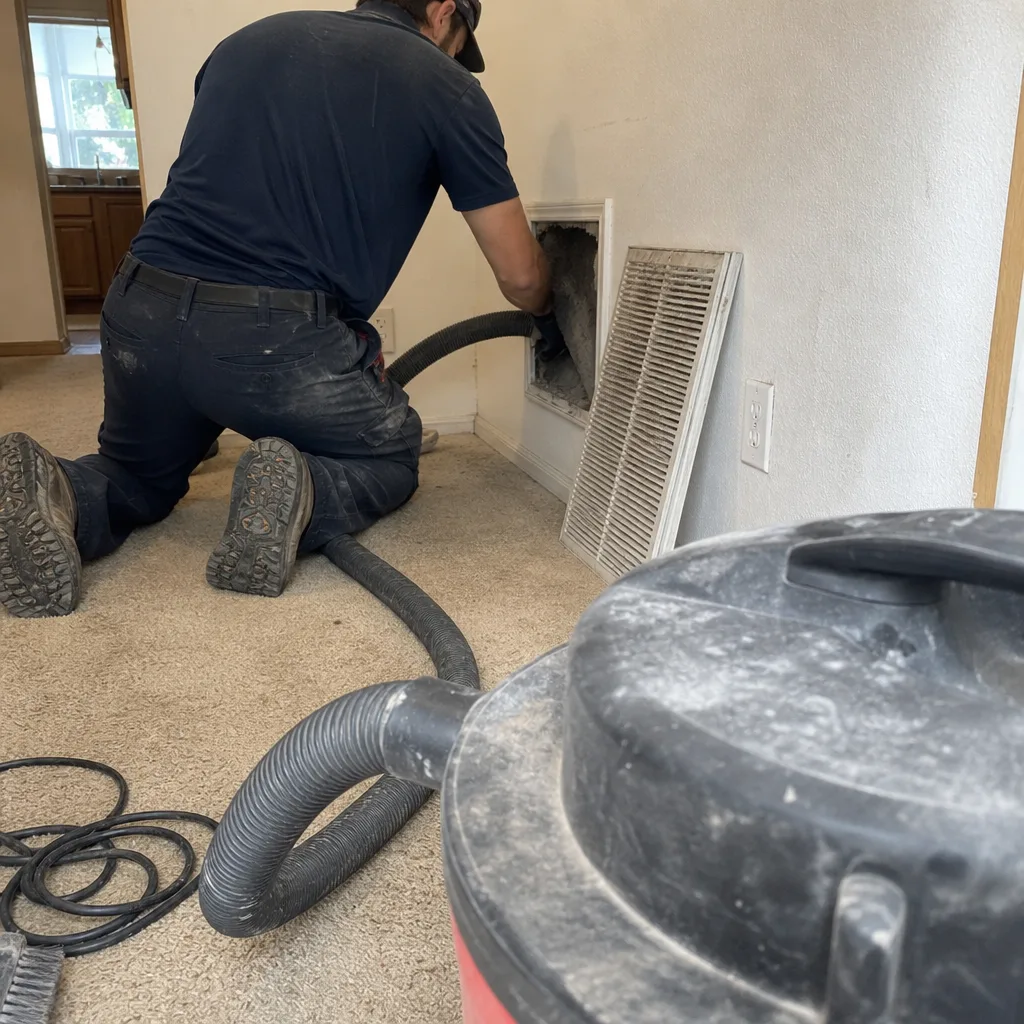 Before
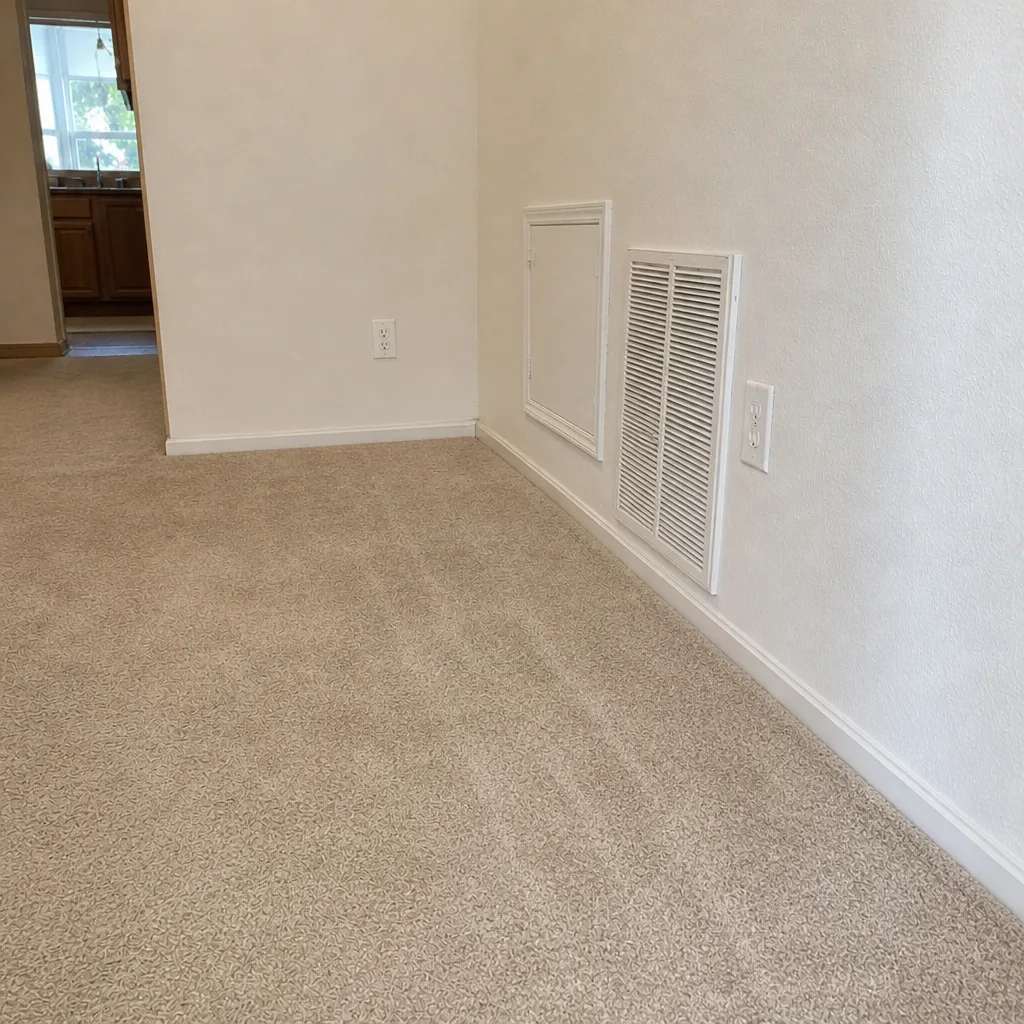 After
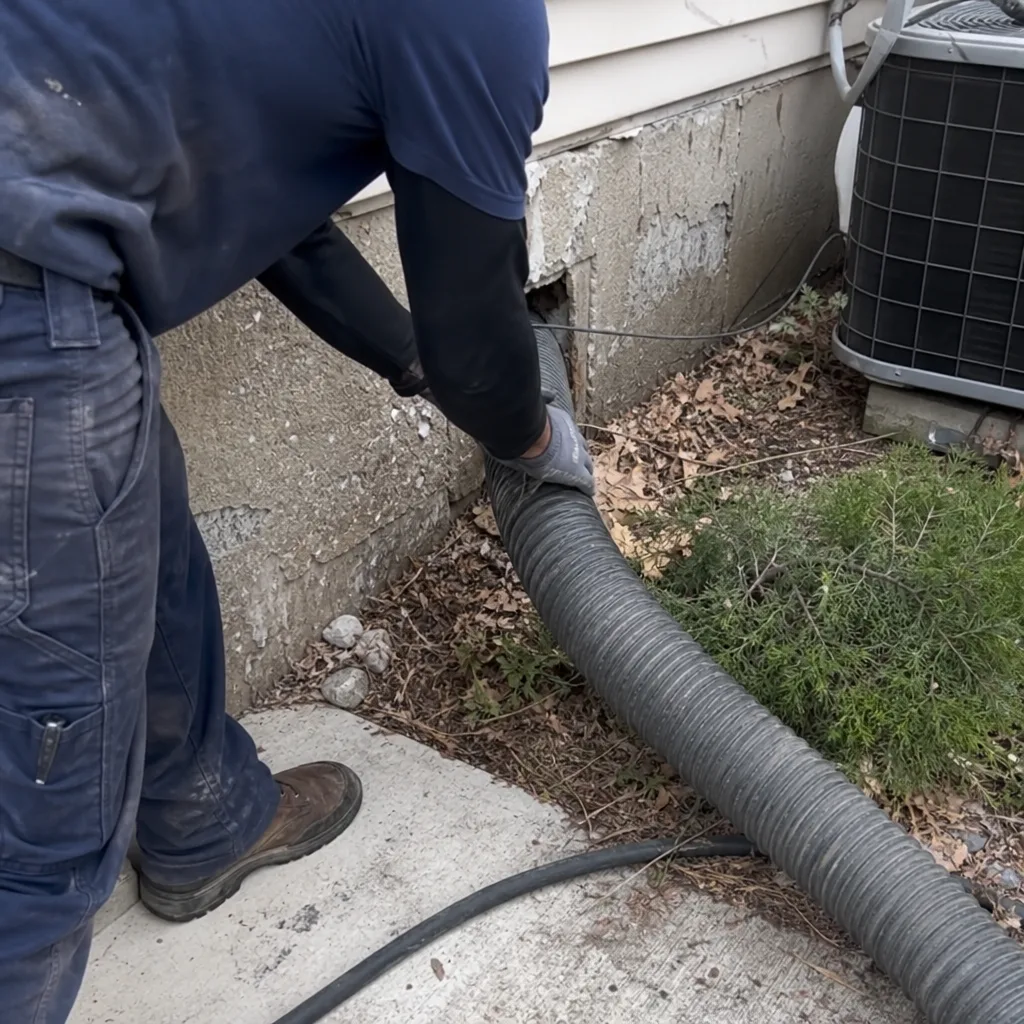 Before
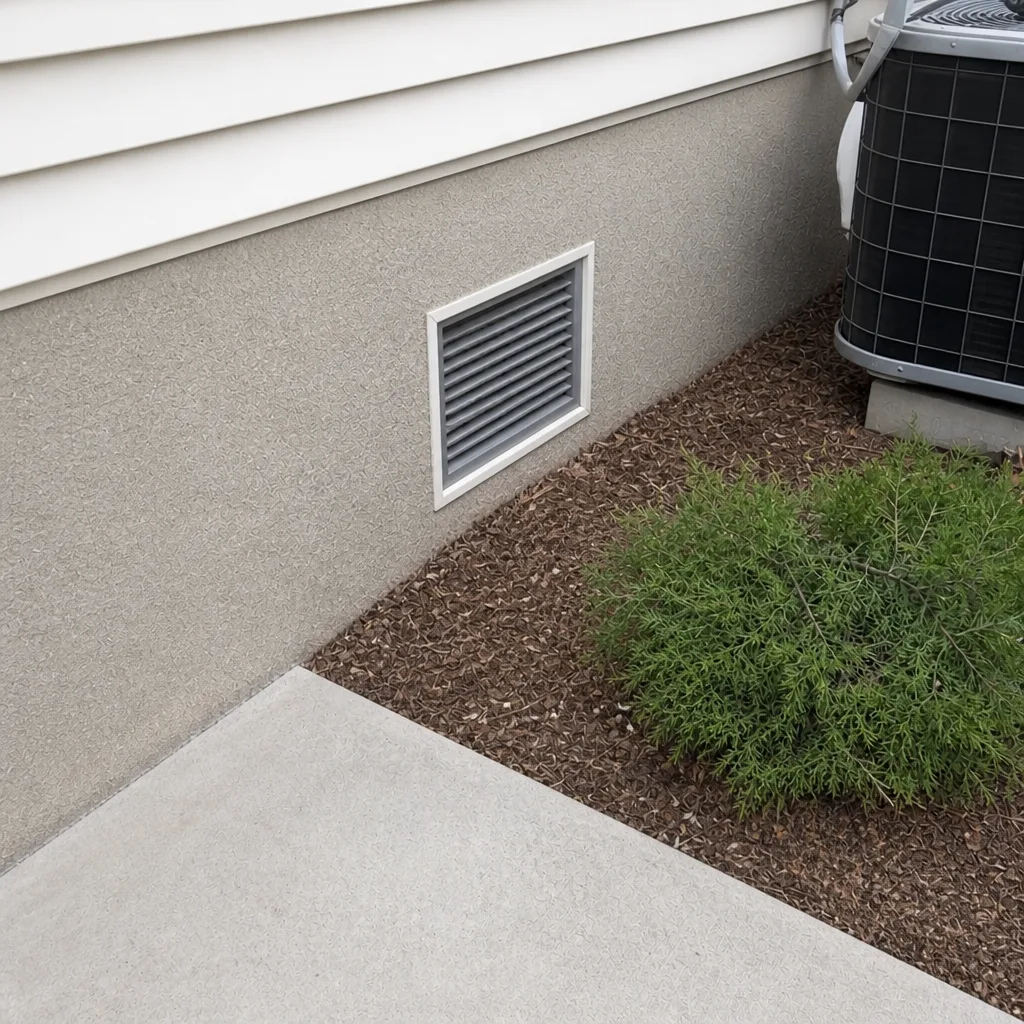 After
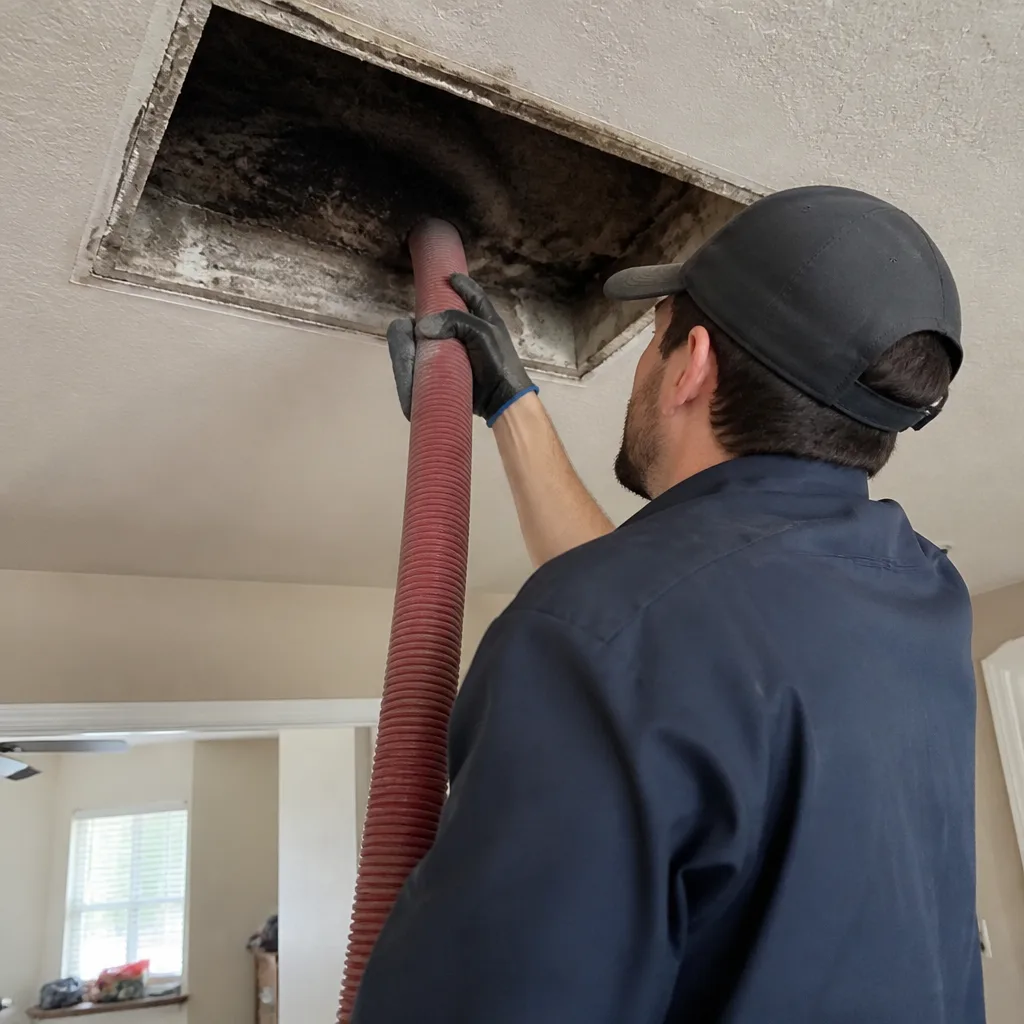 Before
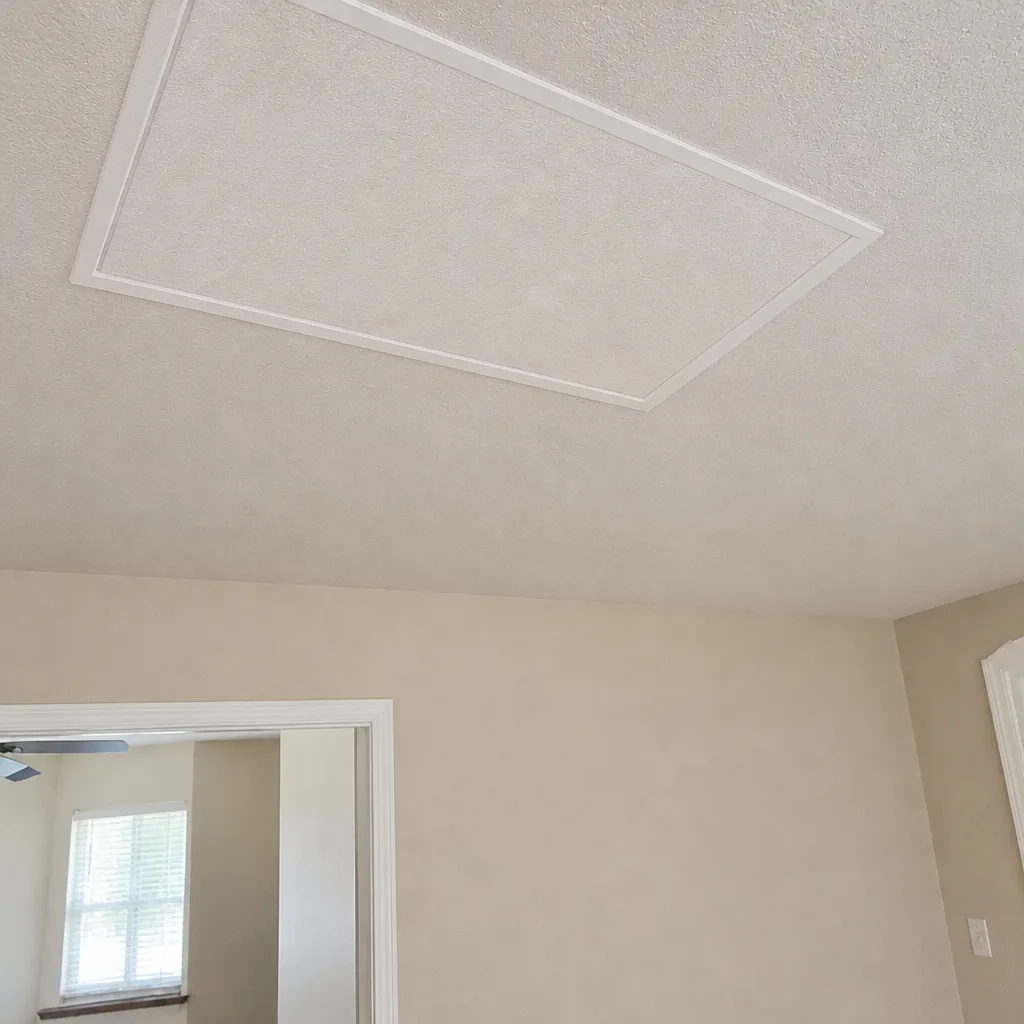 After
When to Call a Professional
Call a professional duct cleaner in Draper when:
- You’ve renovated in the past year and drywall dust is in the air
- Household members react when the HVAC runs
- You’ve bought a new home and want a documented baseline
- You see or smell something in the ducts that isn’t just dust
- You’re selling and want the system on record as clean
Draper Air Duct Cleaning offers free estimates in Draper – call (855) 658-5334. We answer 24/7. Fast dispatch from 7am to 7pm, Sunday through Friday. Draper Air Duct Cleaning covers the whole system: cleaning, repair, sealing, sanitizing, and dryer vent service, so you’re not coordinating three contractors on one job.
Frequently Asked Questions
Yes – surface-level DIY cleaning is safe. Cleaning registers and the first foot of visible duct behind them, replacing filters on schedule, and clearing your dryer vent cap are all reasonable maintenance tasks. What’s not safe or effective is agitating deeper into the system without containment, because dislodged particles spread into living space. For anything past the register boot, professional cleaning with HEPA capture is the better choice.
Three signals point clearly to professional service: visible dust or debris build-up in the return plenum when inspected with a camera, a musty or dusty odor that appears only when the HVAC runs, or a documented event (renovation, water intrusion, vermin) that introduced contamination. Otherwise, most duct systems in Draper homes between cleanings are in better shape than their owners fear. A free visual inspection is the reliable way to answer this – call (855) 658-5334.
Not the vacuum itself – but a shop vac brush applied with too much force at a sharp bend can damage flex duct, and hot air can melt a low-quality hose if you push it too far into a supply line. The bigger concern is that a shop vac has inadequate filtration for fine particles: what it picks up can be exhausted back into the room. It’s a reasonable tool for the register-adjacent 18 inches. It’s the wrong tool for anything deeper.
Whole-home air duct cleaning in the Draper market generally runs in the low-to-mid hundreds of dollars for a standard single-family home, with larger or heavily contaminated systems at the upper end. Dryer vent cleaning runs lower. Pricing is set per system with a written estimate, not per vent – and the estimate is free. Call (855) 658-5334 for an exact number.
Because the job is different. Low-price quotes typically skip negative pressure containment, don’t use contact-cleaning equipment, don’t document with before-and-after photos, and don’t touch the air handler or coil. The technician spends less time, does less work, and leaves the hidden 90% of the system untouched. The gap between a $99 quote and a genuine cleaning isn’t a bargain – it’s a different service. Ask what equipment is being used and whether containment is included.
Most Draper homes can go three to five years between professional cleanings under normal conditions, and longer if the system stays on a regular filter schedule. Homes with pets, recent renovations, allergy-sensitive occupants, or a history of moisture problems should be inspected annually. Between professional visits, the DIY protocol in this guide keeps the visible sections in good shape. When in doubt, call (855) 658-5334 and we’ll give you an honest assessment.
The Bottom Line
DIY duct cleaning in Draper isn’t wrong – it’s just smaller than most homeowners expect. You can keep registers, filters, and your dryer vent cap in good shape with basic tools, and we’d encourage you to. But the trunk lines, return plenum, air handler, and coil – where the bulk of contamination actually lives – require containment, contact cleaning, and HEPA capture that consumer equipment can’t provide. If your system has seen a renovation, a new home purchase, mold, or vermin, professional cleaning isn’t a step you can skip. If it hasn’t, the honest answer may be “wait a while” – and we’d rather tell you that than sell you something you don’t need. Call (855) 658-5334 for a free estimate. We answer 24/7. Fast dispatch from 7am to 7pm, Sunday through Friday.
Written by the team at Draper Air Duct Cleaning.