
Last updated November 23, 2026
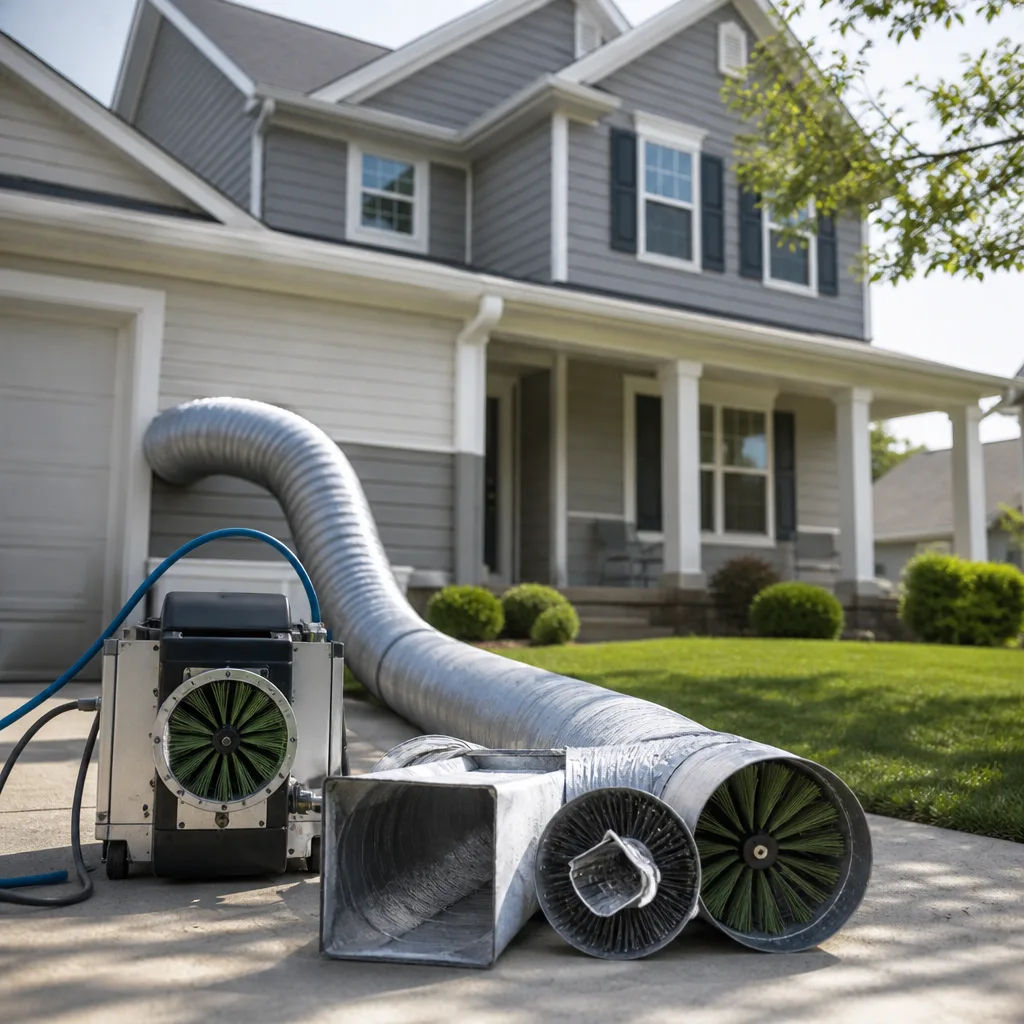 Whole-home duct cleaning
 Dryer vent cleaning
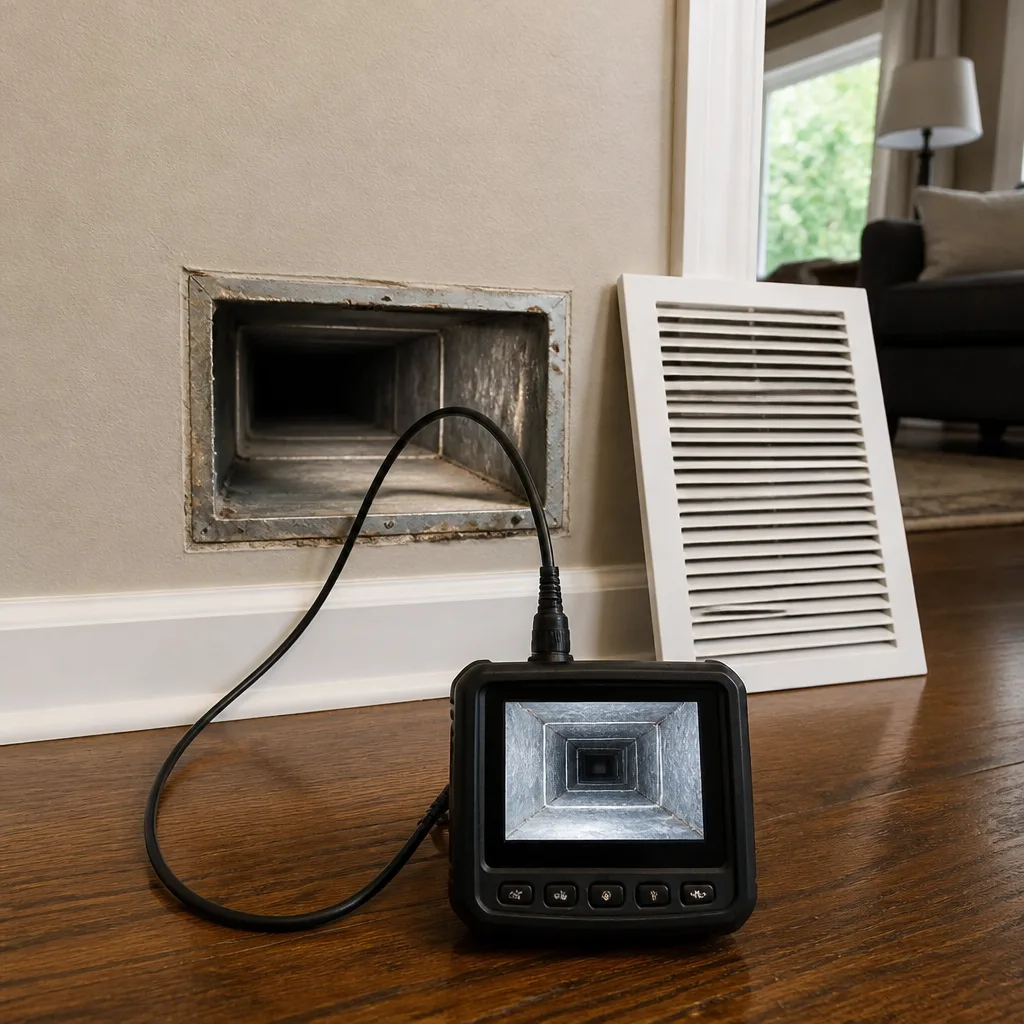 Camera inspection
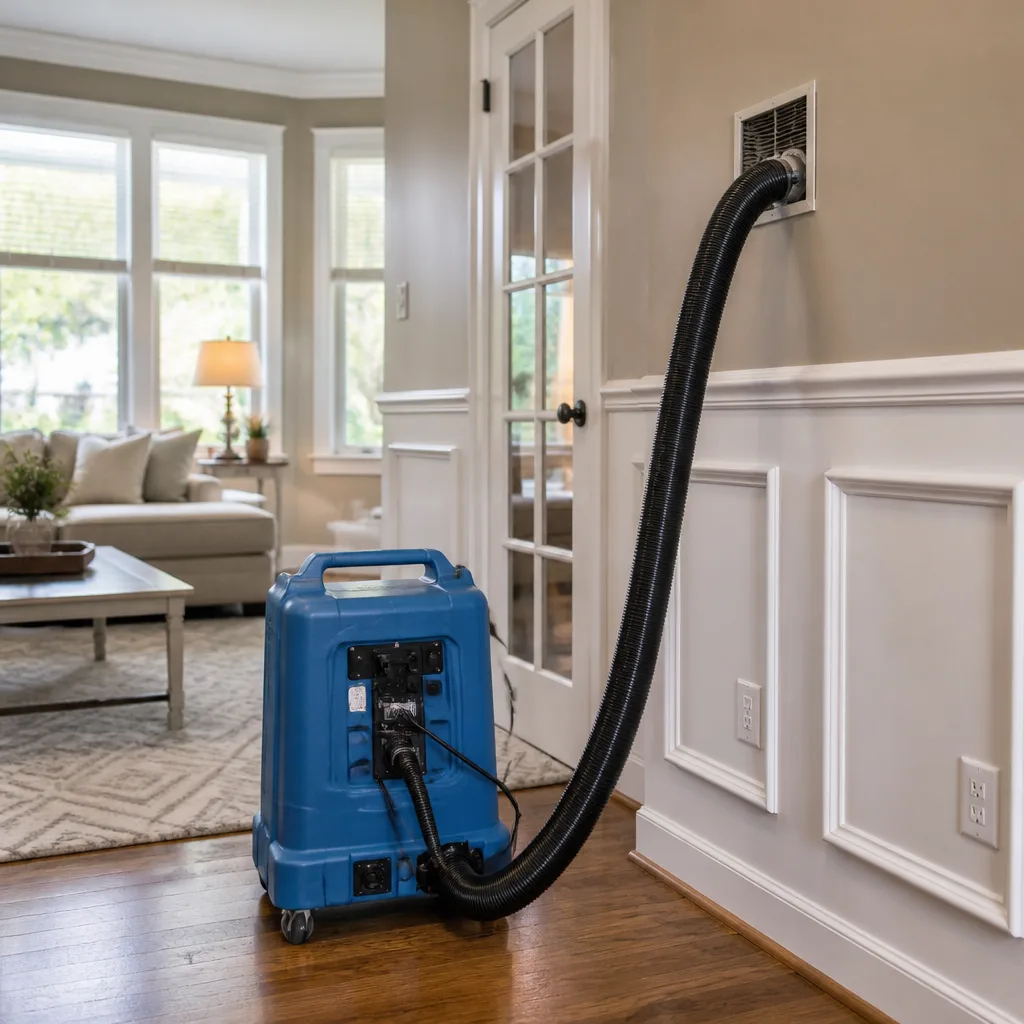 Sanitizing & deodorizing
Whole-system duct and dryer vent check with before-and-after photos - you see exactly what came out of your vents
That "$99 whole-house special" is a bait ad - the real number appears once they are in your hallway, or the "clean" is a shop-vac at the register. We photograph the inside of your ducts before and after instead.
Air Duct Cleaning Warning Signs: A Draper Homeowner’s Reference Guide
If your system short-cycles in winter but the thermostat, refrigerant charge, and filters all check out fine, the actual cause may be a partially collapsed return duct choking airflow before it ever reaches the equipment. That’s a duct problem wearing an HVAC costume, and no amount of part-swapping will fix it. Most homeowners in Draper misread duct symptoms as mechanical failures, so they call the wrong trade first and pay for components that were never failing while the contamination stays put. This guide maps each symptom to its likely cause and tells you which professional to call, which warning signs mean repair rather than cleaning, and what a proper inspection actually reveals.
Quick Answer
In Draper, the warning signs that most reliably point to a duct problem are uneven room temperatures, a musty odor when the furnace first comes on, visible dark dust trails around registers, and allergy symptoms that flare only during winter inversion season. If you notice any of these, a duct inspection comes before an HVAC repair call. Cleaning fixes an accumulation problem; repair fixes a damaged system. Knowing which one you have is the whole point.
Styles & brands we work with
- Whole-home duct cleaning
- Dryer vent cleaning
- Camera inspection
- Sanitizing & deodorizing
Table of Contents
- How Do You Tell a Duct Problem From an HVAC Problem?
- Symptom-to-Cause: The Warning Signs That Actually Matter
- Dirty vs. Damaged: Why Cleaning Isn’t Always the Answer
- Construction-Era Red Flags in Draper Homes
- What a Borescope Actually Shows Inside Your Ducts
- The “It’s Always Been This Way” Trap
- Six Steps to Diagnose Your Own System
- When to Call a Professional
How Do You Tell a Duct Problem From an HVAC Problem?
The honest answer is that you often can’t tell from the thermostat alone, but you can narrow it down by watching where the symptom appears. HVAC failures tend to affect the whole house consistently: the unit won’t fire, won’t cool, or runs constantly. Duct failures are usually room-specific or season-specific, because they live in the branch runs, the return trunk, and the connections hidden in walls, ceilings, and crawlspaces.
In our experience across Draper, the tell is asymmetry. When the living room is comfortable and the upstairs bedroom never is, that’s an airflow distribution story, and airflow distributions are duct territory. When the blower runs but static pressure climbs and the blower has to work harder than it should, that points to a restriction upstream that only a duct inspection will find. HVAC techs are trained to test equipment and refrigerant circuits; they don’t open walls to check flex duct sagging in a joist bay, and they don’t run a camera through the trunk line. That job requires a duct specialist with the right equipment, and a low-bid cleaner with a shop vac can’t diagnose it either. This is the difference between a service that sanitizes surfaces and an air duct cleaning partner who inspects, documents, and hands you a verdict with photo evidence.
A useful rule: if the symptom is uneven, localized, or seasonal, suspect the ducts first. If it’s total system failure, suspect the equipment. And if it’s both, do the duct inspection before you authorize any HVAC repairs.
Symptom-to-Cause: The Warning Signs That Actually Matter
Not every symptom means “clean your ducts,” and treating them all the same way wastes money. Here’s the mapping we’ve worked out from years of opening systems in Draper’s housing stock. Match your symptom to the cause column before you call anyone.
- Uneven room temperatures (one room always cold in winter or warm in summer): blocked or disconnected supply runs, a closed-off or crushed flex branch, or an undersized return. This is a distribution problem, and it calls for a duct technician to trace the run and repair it, not an HVAC tech to overcharge the system.
- Musty or earthy odor on first heat-on: biological growth in the return plenum or on the evaporator coil surface, then released through the supply runs. This is a moisture-and-contaminant issue, and the fix involves sanitizing, not just vacuuming.
- Visible dark dust trails or “black ring” around registers: filtration bypass, where the filter frame doesn’t actually seal against the duct, letting unfiltered air slip around the edges. Over time, that unfiltered air coats the plenum interior with a fine black dust film.
- Worsening allergy symptoms that only appear in winter: particulate accumulation in the return trunk that gets recirculated when the house is sealed against cold air. Inversion season in Draper traps fine dust and smoke in the valley, and your system pulls that air through its returns for months.
- Increased energy bill with no change in usage: a restriction or disconnection driving up static pressure and making the blower run harder and longer than it should, before any mechanical component fails.
- Rattling or whistling at specific registers: loose flex duct connections or a disconnected takeoff behind the drywall, letting air escape into a wall cavity instead of the room.
Two of those six are pure repair symptoms, and two are pure cleaning symptoms. The other two can be either. That’s why the inspection has to happen before the invoice is written, and why we use a borescope on every system before we make a single recommendation. Your ducts are only as clean as the machine doing the work, but before the machine runs, the camera tells the truth.
Dirty vs. Damaged: Why Cleaning Isn’t Always the Answer
A dirty duct system is a maintenance problem. A damaged duct system is a performance problem. Cleaning fixes the first; only repair fixes the second. Confusing them is the single most expensive mistake a Draper homeowner makes, because a damaged system will re-contaminate itself within weeks of a cleaning if the leak or disconnect isn’t sealed first.
Here’s how we separate the two during inspection:
- Camera pass through every accessible trunk and branch. A borescope shows accumulation depth and pattern. Uniform dust along the bottom of a run is normal accumulation. A dust ring around a joint means air is leaking there.
- Pressure and airflow readings. A restriction shows up as a static-pressure gap between the blower and the register. A disconnected run shows up as no reading at all.
- Visual joint inspection at every accessible takeoff. Flex duct taped at the collar with dried mastic and no mechanical strap is a candidate for a leak or a full disconnect.
- Seal test at the plenum. The return plenum and the supply plenum are the two places where a small gap does the most damage, because the pressure difference across them is highest.
A damaged system needs HVAC cleaning plus duct repair and sealing before settling for a final sanity check. A dirty system gets cleaned, and the cleaning holds. We clean, seal, and sanitize under one call so you’re not coordinating three contractors and hoping they talk to each other. The service categories exist because the underlying problems are different, and treating them as interchangeable is how discount cleaners end up over-promising and under-delivering.
Construction-Era Red Flags in Draper Homes
Draper grew hard in the 1990s and 2000s boom, and that construction era carries specific duct risks. Homes built in that window were commonly fitted with flex duct: a coiled, wire-reinforced plastic that’s fast to install and easy to route through tight joist bays. It’s also the most failure-prone duct material in residential use, because it sags over time and kinks if it’s routed with tight bends or pulled too taut around corners.
What that means in practice is a house that was fine in 2002 and shows warning signs in 2026 without anything mechanical breaking. Specific red flags we look at:
- Sagged runs in attic and crawlspace bays. Flex duct that isn’t properly supported sags under its own weight. A sag reduces its effective diameter and chokes the branch it feeds, and it looks exactly like an HVAC underperformance problem from the thermostat.
- Kinked bends behind walls. A 90-degree bend in a flex run that’s made too tight literally crushes the tube at the elbow. The room it feeds never gets the air the thermostat promised.
- Compressed runs under flooring and joist bays. Where the installer had to flatten the duct to fit, the branch loses capacity. The room is always a little short, and the homeowner normalizes it.
- Return trunk undersized for the equipment. The original equipment and the original duct may have matched; a replacement furnace from a later retrofit sometimes didn’t update the trunk, so the return is undersized for the heat pump or furnace pulling through it.
- Dryer vent routing through exterior walls. Longer, hidden dryer vent runs with flexible transitions trap lint and stay cool, which is a real fire-safety problem, not a minor lint-cleaning inconvenience.
In Draper specifically, the winter inversion layer means homes in this era are sealed tight for cold air, so any duct leak in a house that’s already fighting inversion-season particulates makes the indoor air quality problem worse, not just the airflow problem. That’s the reason we treat the construction-era timeline as a diagnostic starting point, not just a curiosity. A dryer vent cleaning inspection through the same era homes is a separate service for exactly that safety reason, and one we don’t treat as an upsell.
What a Borescope Actually Shows Inside Your Ducts
A borescope is a thin camera on a flexible cable that a technician runs through the trunk and branch lines. The picture on the screen is the difference between a marketing claim and a diagnosis. Here’s the visual reference language we use in our written reports, because it also lets a homeowner understand what they’re looking at when we hand them the photos.
What a contaminated duct looks like on camera
- Black or dark grey dust film coating the bottom of the run, sometimes with lighter “tide line” patterns where the airflow has moved the accumulation over time.
- Biological growth as a light green-grey surface fuzz, usually near the plenum and coils, where condensation gives it the moisture it needs.
- Debris strewn at low points: drywall dust, construction debris, or pet hair trapped in a sagging run or a horizontal section.
- Visible gaps at a joint, with a cloud or plume of loose dust around the seam, showing where air is escaping.
- Flattened or crushed sections where the flex duct kinked or compressed, blocking light through the tube.
What a clean duct looks like on camera
- Uniform light-grey or white liner with no dark film, and no visible debris on the bottom of the run.
- Clear joints with intact mechanical strap or mastic, no visible plume, no dust ring at the seam.
- Open tube profile through a bend, confirming no kink, no crush, and no restriction.
- Dry interior with no moisture staining or growth along the coil housing or plenum wall.
The rotary contact-cleaning system we use (a professional-grade rotary tool, not a wand and a vacuum) brings the inside of the duct to that second list, and then the negative-air equipment captures what’s dislodged instead of redistributing it into the room. A consumer shop vac and a brush on a stick can’t reach the deposits in the flexible sections, and a homeowner who’s never seen the inside of the duct has no baseline for what “clean” actually is. The camera establishes both.
The “It’s Always Been This Way” Trap
This is the hardest warning sign to diagnose, because there’s no sign at all. Homes in Draper that have a chronic duct problem are usually the ones where the homeowner has learned to compensate: they close the bedroom door in summer, they run the space heater in the office, they’ve got a second filter in the return grille because it “helps.” Warning signs that arrive slowly and stay constant become the baseline, and the homeowner never calls anyone, because nothing is getting worse.
What a baseline inspection reveals in those homes is usually one or two specific defects that have been present since the original install or the last retrofit. A sagged branch from 2005. A disconnected flex takeoff behind a wall from the same era. A return plenum without a proper filter seal. None of these are visible from inside the house, and none of them will ever self-correct.
Three questions that break the trap:
- Is there a room that’s never comfortable, even after an HVAC tune-up? If yes, the duct system has a distribution problem you’ve stopped noticing.
- Has the filter behavior changed? A filter that loads up with dark dust in a few weeks is telling you the plenum is dirty, not that the filter is too cheap.
- Has anyone opened the duct system since the house was built? If the answer is “no,” the system’s condition is unverified, and unverified means untreated if anything has failed.
That last point is why we run a baseline on every Draper Air Duct Cleaning inspection, not just on the ones where the homeowner already knows something’s wrong. The evidence comes first, then the recommendation, then the invoice. You’ll see your own ducts on camera before anything is approved.
Six Steps to Diagnose Your Own System
You can do a limited amount of valid diagnosis from the thermostat and a flashlight. We’ve seen homeowners in Draper reach the right conclusion on their own with this sequence, and it makes the professional inspection faster and cheaper because it narrows the search. Do these in order, and stop at the first one that matches:
- Compare rooms, not the whole house. Open every supply and return, set the system to run for ten minutes, then check each room with the same thermometer. If more than one room is off by more than a few degrees, the distribution is off. That’s the duct system.
- Check the registers for a dust trail. Run a white cloth over the grille and the wall around it. A dark ring at the grille means filtration bypass; a wide black dust trail means the system is pulling unfiltered air. That’s a duct problem, and it’s a filtering and sealing issue.
- Smell the first heat-on of the day. Musty or earthy smell means biological growth somewhere in the return or the coil housing. A chemical or plastic smell is worth an HVAC inspection. The two are not the same, and don’t let anyone tell you they are.
- Listen for rattles at one register. A rattle at one register while the others are quiet is usually a loose fitting or disconnected takeoff. It’s the most common duct repair, and it’s the one an HVAC tech won’t find without opening the wall.
- Check the filter fit. A filter that slides loosely in the frame is bypassing. It has to be snug to the frame, and the frame has to be sealed. That gap is often the root of the black dust trail from step 2.
- Note the season. Symptoms that appear only in winter are usually particulate accumulation or growth linked to a sealed-up house. Symptoms that appear only in summer are usually moisture or equipment. Note the timeline; it’s a real diagnostic clue.
If more than one step matches, you have a duct system that needs a full inspection. If only step 6 matches, you may still have a duct issue, but it needs the camera to confirm.
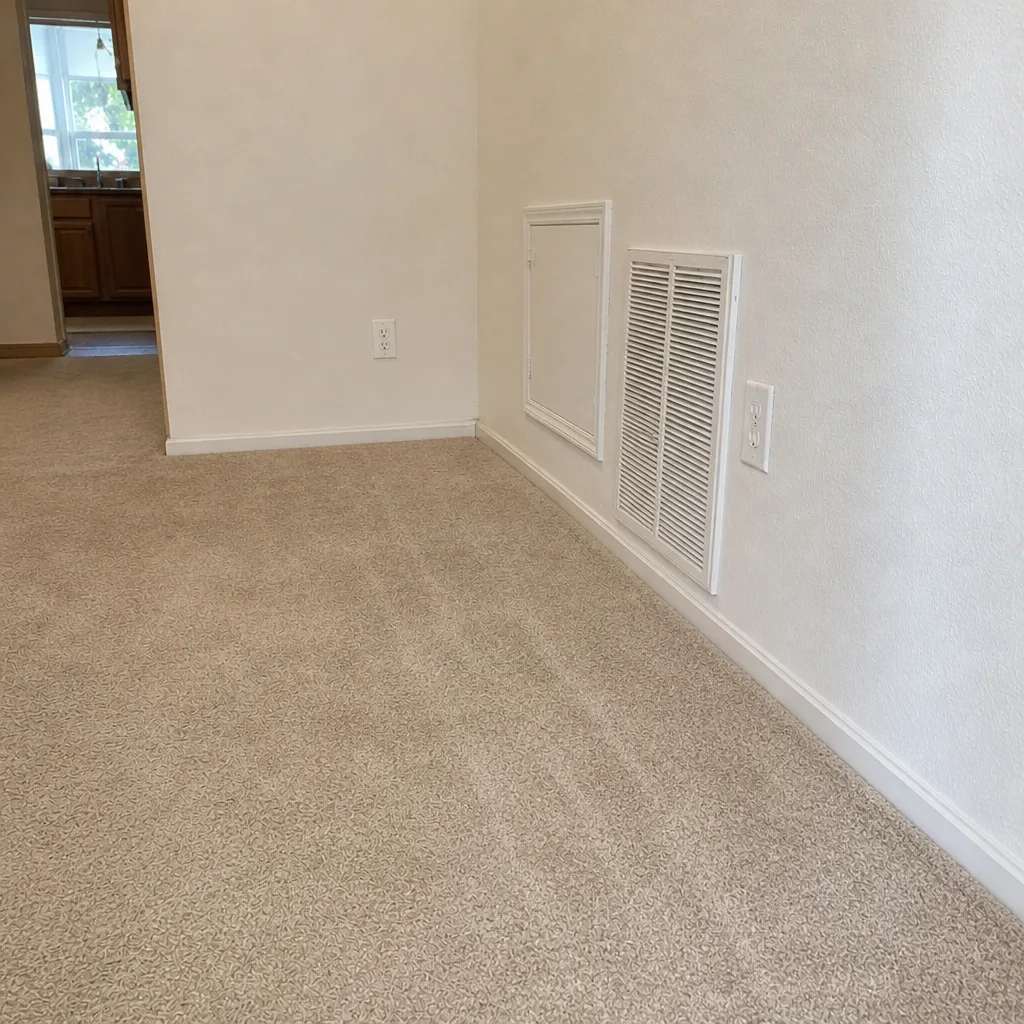
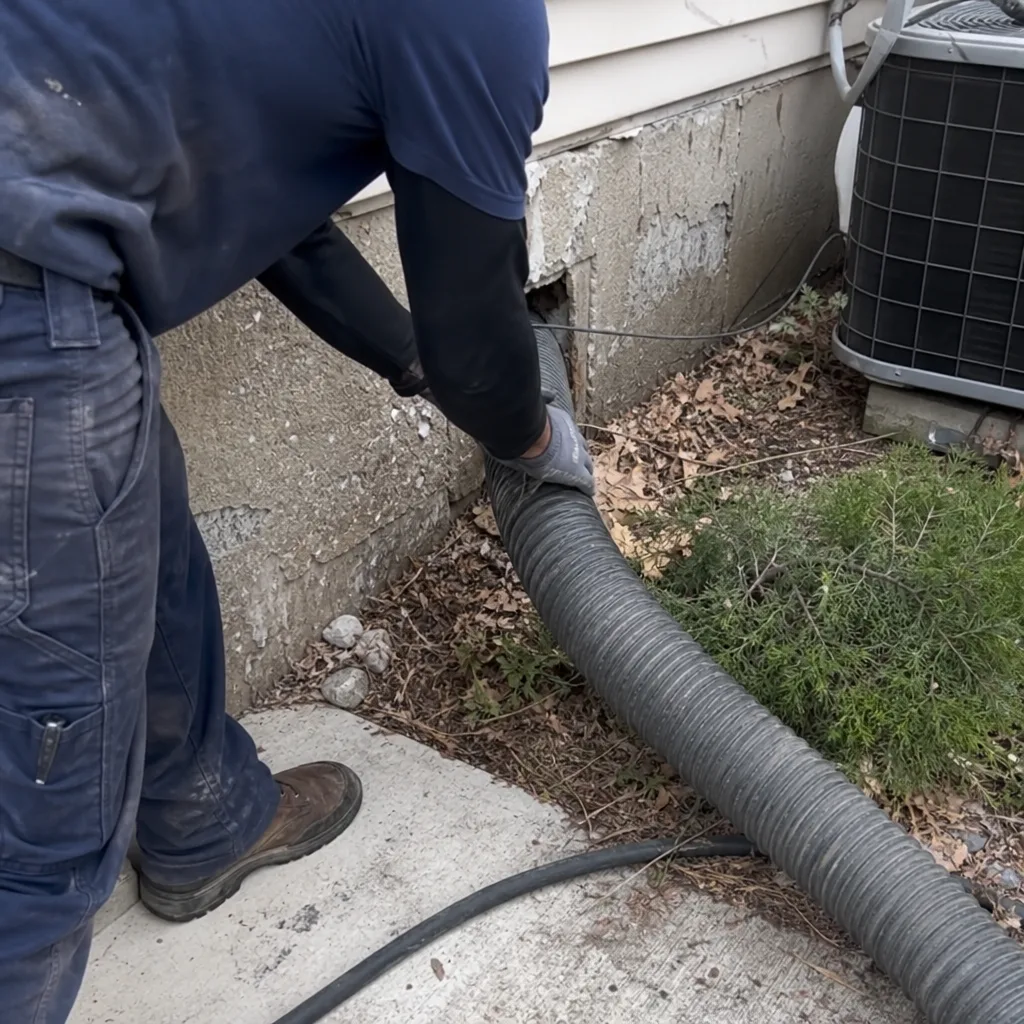
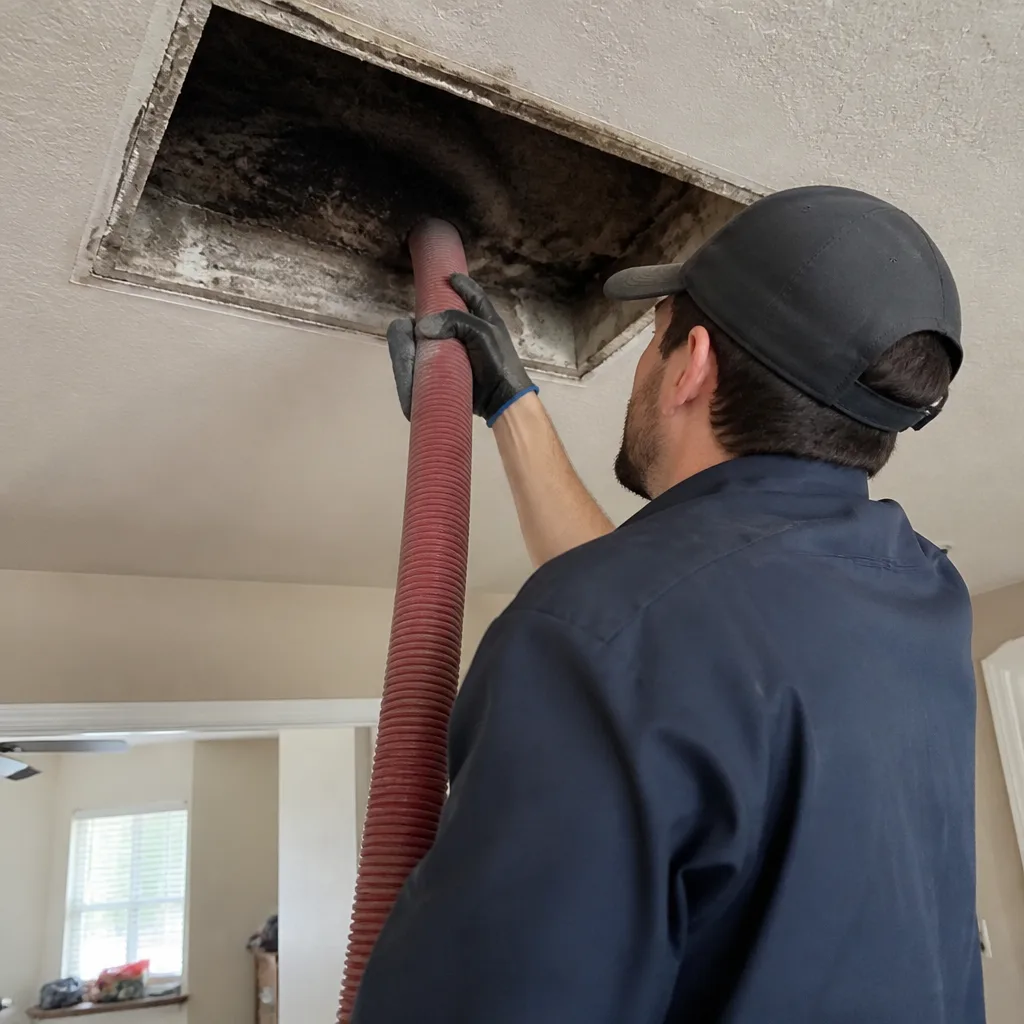
See the difference
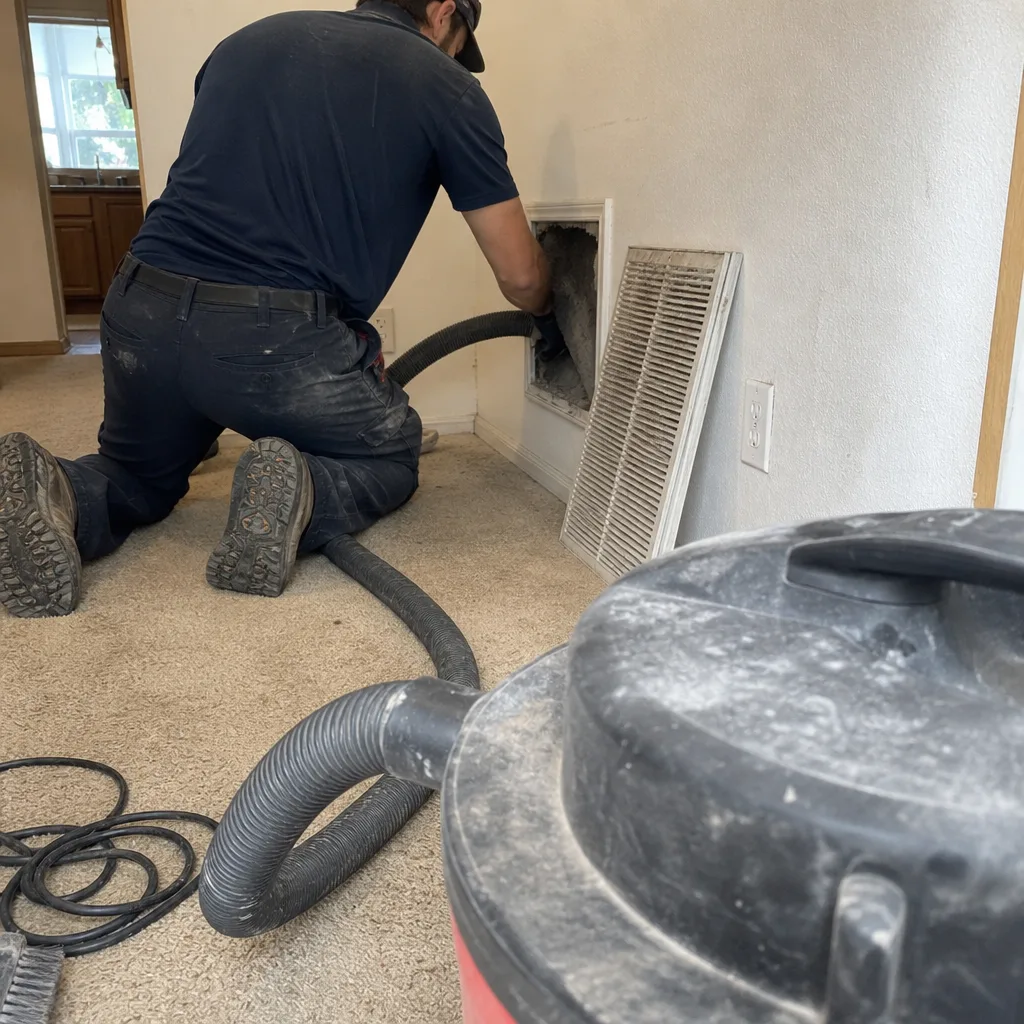 Before
 After
 Before
 After
 Before
 After
Common Mistakes to Avoid
- Calling an HVAC tech first for a symptom that’s room-specific. An HVAC provider only tests equipment and refrigerant circuits, and won’t open the wall to find a disconnected takeoff, which is why the coil replacement or the overcharged system gets paid for while the duct problem stays.
- Trusting a low-bid cleaning as a “duct inspection.” A discount cleaner with a shop vac and a brush cannot show you the inside of the system, and the low price is a signal that the scope is small, not that the work is efficient.
- Cleaning a damaged system before repairing it. If a branch is disconnected, cleaning first re-contaminates it within weeks. The repair has to be sealed and tested before the cleaning holds.
- Assuming “always been this way” means no problem. A room that’s never been comfortable is a chronic duct issue, not the personality of the house.
- Skipping the dryer vent. A hidden dryer vent run is a fire-safety item, and it doesn’t show up in a duct inspection, so it has to be a separate ask.
- Buying a filter upgrade when the filter frame leaks. A high-end filter in a loose frame bypasses unfiltered air around its edges. Fix the frame first, then upgrade.
- Ignoring the winter pattern. In Draper, the inversion season means any duct leak recirculates valley particulate through a sealed house for months. If allergy symptoms flare only in winter, the duct system is part of the story.
When to Call a Professional
Call a duct specialist when you have a room that’s never comfortable after an HVAC tune-up, a musty smell on first heat-on, a visible black dust trail around registers, or allergy symptoms that flare only in winter. Call immediately, without trying the cleaning first, when you have a rattle at a single register, a collapsed run you can see in the crawlspace, or a dryer vent that hasn’t been inspected in the time you’ve owned the house. And call before you authorize any HVAC repair, because a duct restriction shows up as a failing component and gets replaced unnecessarily. We use professional-grade equipment from equipment brands like Abatement Technologies for negative-air containment and Aprilaire or Honeywell components for filtration and sealing, so the inspection and the repair stay with one team. Draper Air Duct Cleaning offers free estimates in Draper: call (855) 658-5334. We answer 24/7, and fast dispatch runs from 7am to 7pm, Sunday through Friday.
Frequently Asked Questions
The four most common are uneven room temperatures, a musty odor on first heat-on, dark dust trails around registers, and allergy symptoms that flare only during winter inversion season. Each one points to a different cause, so the sign determines whether you need cleaning, repair, or both.
If the symptom is room-specific, seasonal, or shows up as a dust pattern, it’s usually a duct problem. If the whole system fails or won’t fire, it’s usually equipment. A duct inspection with a camera confirms which one you’re dealing with before any repair is approved, and it’s worth doing first.
You need repair if the camera shows a disconnected run, a crushed flex section, or a leaking joint. You need cleaning if the accumulation is uniform and the joints are intact. Cleaning a damaged system before repair re-contaminates it within weeks, so the repair has to come first.
A single room that’s always cold usually has a blocked, disconnected, or kinked supply run, or a flex duct that’s sagged or been crushed in a joist bay. It looks like HVAC underperformance from the thermostat, but it’s a distribution issue that needs a duct specialist to trace. Call (855) 658-5334 for an inspection.
The black dust ring itself is a symptom of filtration bypass, meaning air is slipping around the filter frame instead of through it. It usually indicates the frame needs sealing and the plenum interior needs cleaning. Both have to be addressed together, not one without the other.
A proper inspection involves a borescope camera pass through every accessible trunk and branch, pressure and airflow readings at the registers, a visual joint check at the takeoffs, and a seal test at the plenum. The photos go in the report and the recommendation follows the evidence.
Call a duct specialist first when the symptom is room-specific, seasonal, or shows up as a dust pattern. Call an HVAC tech first when the system won’t fire, won’t cool, or fails completely. If the symptom is unclear, a duct inspection is the safer starting point because it rules out the hidden problem before you pay for parts.
The Bottom Line
Most duct warning signs in Draper are misread as HVAC failures, and that mistake is expensive because the actual contamination or damage never gets treated. Learn the mapping: uneven or seasonal symptoms point to ducts, whole-system failures point to equipment, and a borescope settles the argument. Dirty and damaged are different problems with different fixes, and the 1990s-to-2000s flex-duct housing stock means sagging and kinks are common. If any of the warning signs in this guide match your home, get the inspection before you authorize a repair. Call (855) 658-5334 for a free estimate. We answer 24/7, and fast dispatch runs from 7am to 7pm, Sunday through Friday.
Written by the team at Draper Air Duct Cleaning.